Why Data Aggregation?
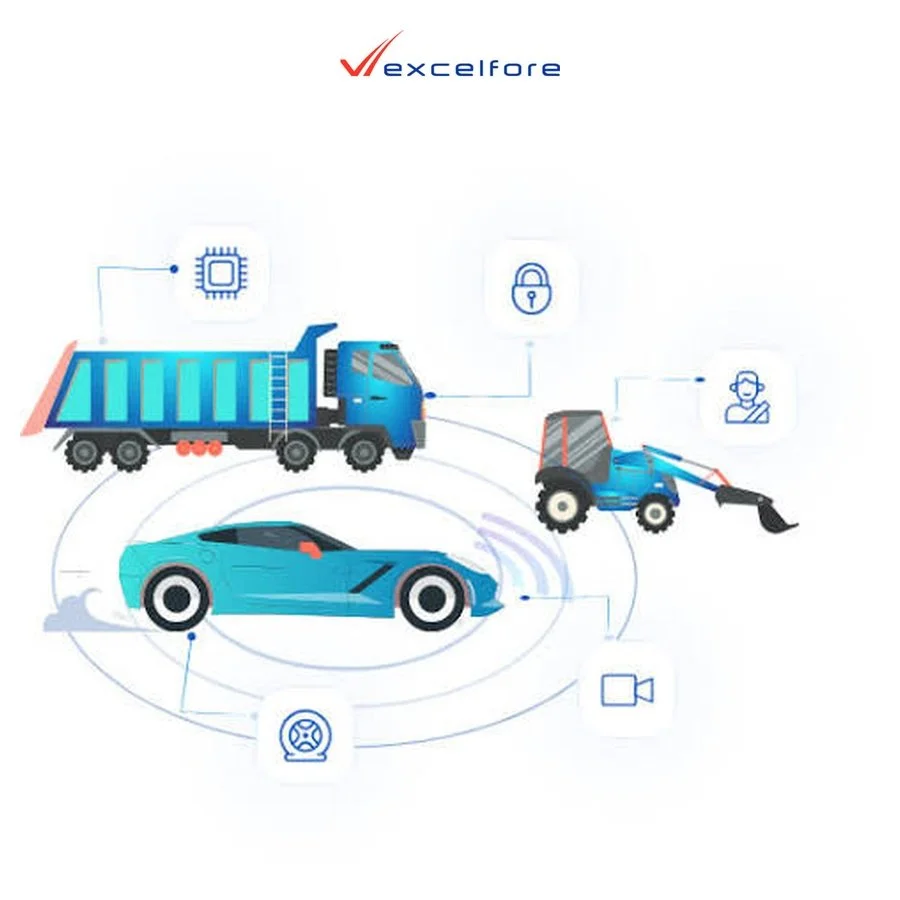
In the automotive and IoT industries, millions of connected devices constantly generate massive streams of real-time data. These data flows power critical functions such as remote diagnostics, continuous monitoring, fleet management, and even real-time remote control. But without effective aggregation, the sheer volume, variety, and velocity of this data can overwhelm networks, cloud systems, and analytics platforms.
Data aggregation solves this challenge by collecting, filtering, normalizing, and prioritizing the right data at the right time. Instead of transmitting all raw data, it ensures that only the most relevant and actionable information reaches the cloud or downstream systems, improving efficiency, reliability, and cost-effectiveness. This is especially crucial for digital twin ecosystems, where early testing, simulation, and evaluation cycles depend on timely and accurate data feeds.
As systems grow more complex and distributed, data aggregation has become a cornerstone of connected-vehicle and IoT architectures.
It enables developers and operators to:
Reduce network and storage overhead by eliminating unnecessary or redundant data.
Enhance security and data integrity through standardized pipelines and edge-level pre-processing.
Unlock faster, smarter analytics by ensuring that ML and AI models are trained on clean, relevant datasets.
Support real-time decision-making where milli-seconds matter, such as in autonomous driving or remote industrial control.
Drawing on its deep expertise in in-vehicle and IoT networking and leveraging the eSync standard data pipeline, Excelfore delivers advanced solutions like eDatX Data Aggregation and Edge AI–based anomaly detection. These technologies enable OEMs and IoT providers to harness the full potential of their data—securely, efficiently, and intelligently, turning overwhelming data into actionable intelligence.
Device-to-Cloud Enterprise Solutions
-
![Excelfore eDat]()
Excelfore eDatX
eDatX Data Aggregation
Scalable edge-to-cloud data aggregation for connected vehicles. Collect, process, reduce, and securely deliver relevant vehicle data through the eSync pipeline.
Multi-ECU Data Collection
Edge Data Processing
Rules-Based Aggregation
Data Reduction & Subsampling
Configurable Data Retention
Rolling Buffer Management
OTA-Updatable Policies
Secure Cloud Delivery
-
![LG OTA&DM]()
LG OTA&DM
OTA & Device Management
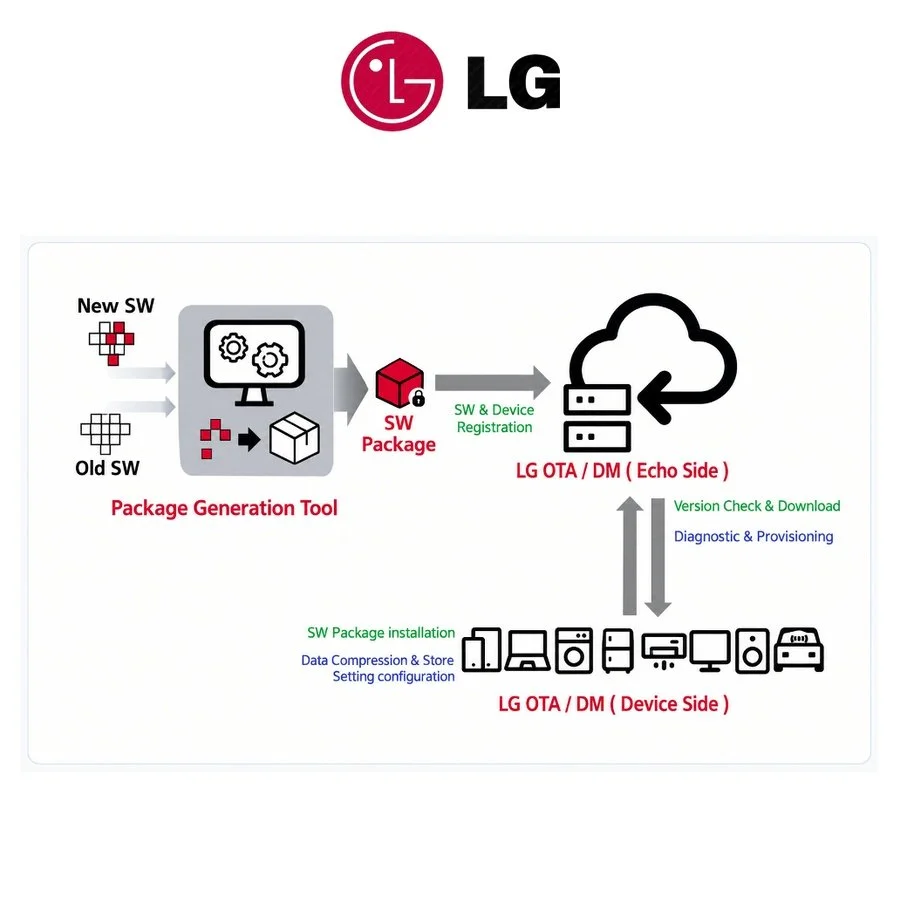
Secure and scalable over-the-air updates and device management for connected products. Remotely deploy software, manage devices, collect data, and diagnose systems across diverse platforms.
Software & Firmware Updates
Multi-OS Support
Delta Package Generation
A/B Seamless Updates
Automatic Rollback
Gateway Delta Updates
Secure Update Delivery
Device Configuration
Remote Diagnostics