
AUTOSAR
RealThings’ proprietary AUTOSAR ARXML parsing toolsAutomated test and Validation Pipeline with API
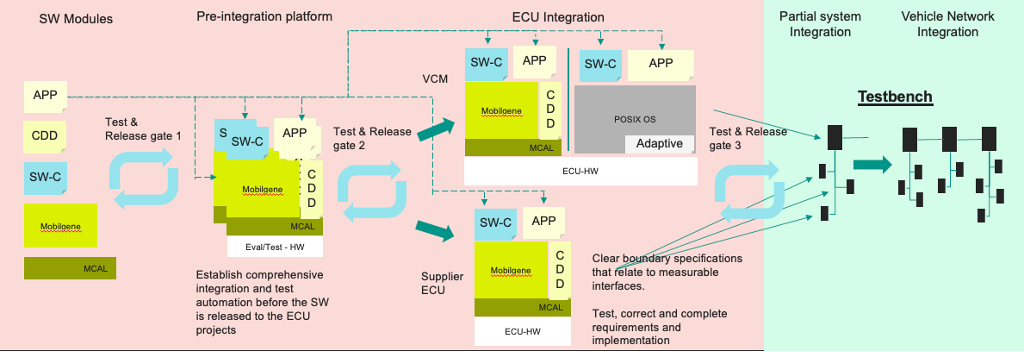
As automotive and IoT systems evolve, the number and variety of peripherals continue to grow, along with increasing dependencies and complex test coverage requirements. Consequently, developers—especially in large-scale projects—face significant challenges in executing fast and comprehensive testing cycles.
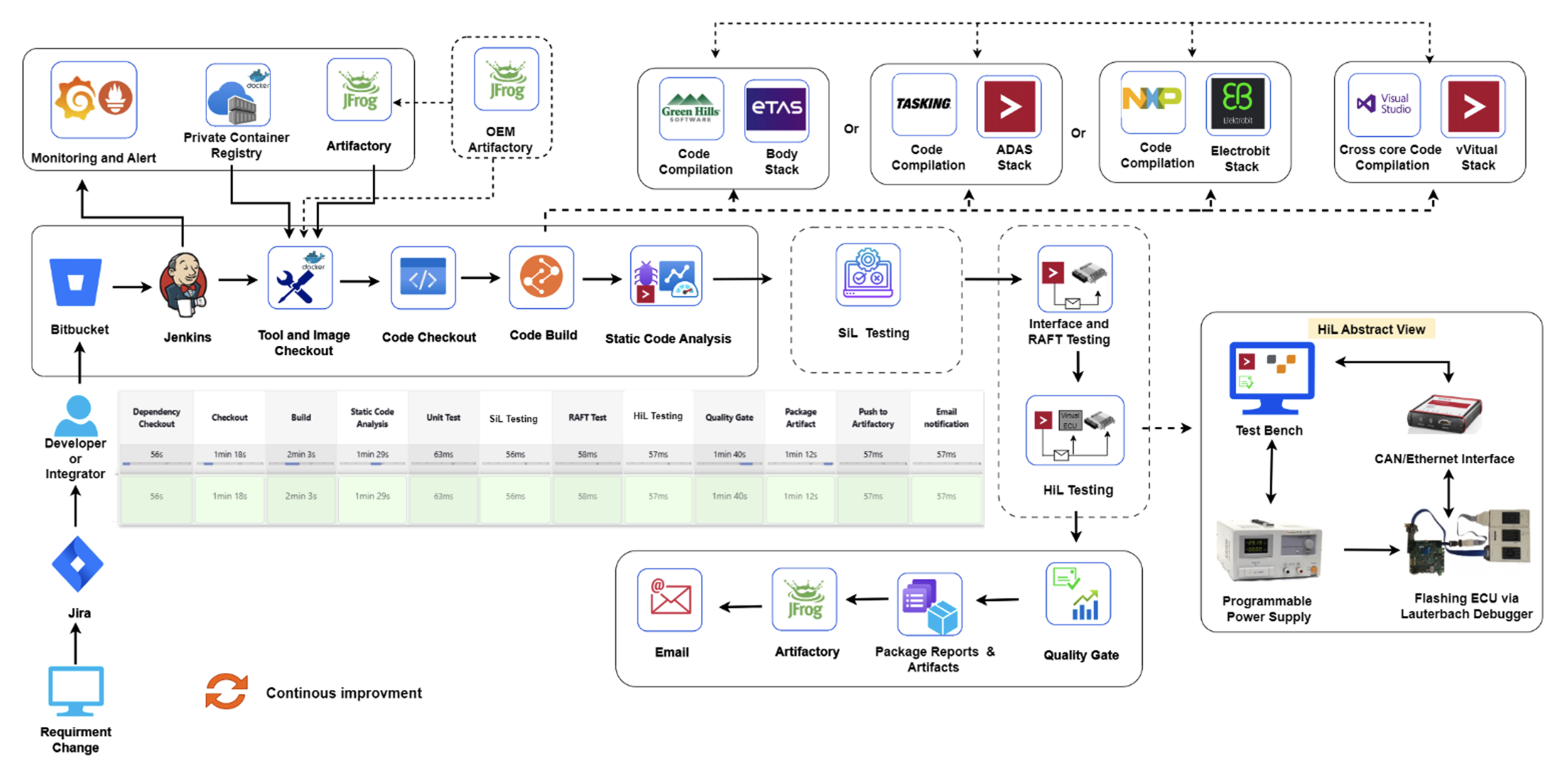
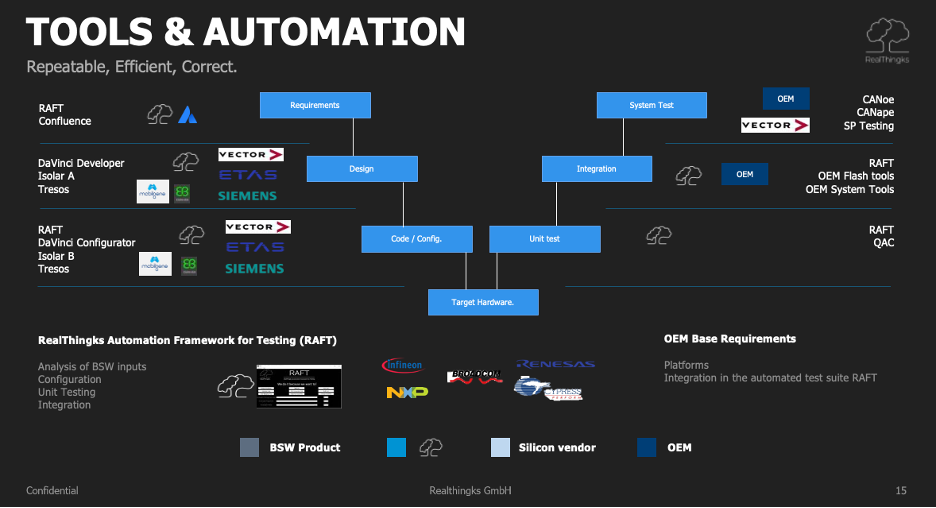
To address this, RealThings has implemented an automated test and validation pipeline that integrates everything from source code builds to various testing tools and formats. This end-to-end automation has enabled reductions in test time and costs by up to 95%.
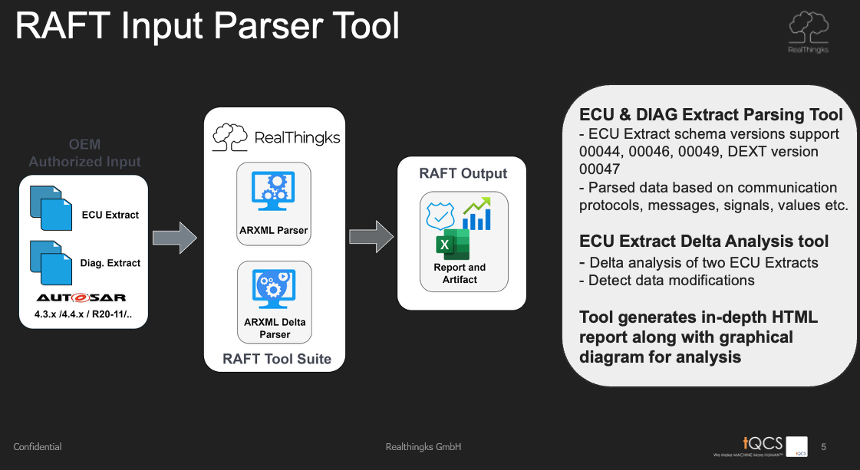
A key strength of RealThings lies in its proprietary AUTOSAR ARXML parsing tools, including:
ECU & DIAG Extract Parsing Tool
Supports ECU Extract schema versions 00044, 00046, 00049, and DEXT version 00047
Parses detailed data based on communication protocols, messages, signals, values, and more
ECU Extract Delta Analysis Tool
Performs delta analysis between two ECU Extracts
Detects data modifications efficiently
These tools generate in-depth HTML reports with graphical diagrams to support detailed analysis. Together, they deliver powerful automation capabilities specifically tailored for AUTOSAR-based vehicle software development and validation.
Case Studies
| OEM 1 – ECU 1 | OEM 1 – ECU 2 | Re-Integration | |
|---|---|---|---|
| Explanation | First ECU integrated and tested | Second ECU integrated and tested | Re-Integration of same software module developed by a different supplier |
| Cost Savings | Investment: € 230.000 Found errors early saved approx € 700.000 in first test run. | Investment: 0 Found errors early saved approx € 700.000 in the second test run. | Investment: € 5.000 Find errors early saved approx $2.000.000 in the first test run. |
| SpeedTest creation | 25% faster | 25% faster | 100% faster |
| SpeedTest execution | 95% faster | 95% faster | 95% faster |
| QualityDefect Escape Rate. (Percentage of defects that escape from one stage of development to the next) | — | — | < 5% |
| FlexibilityAre there restrictions on the software implementation method? | Any software implementation can be validated to meet the quality and test criteria. | Any software implementation can be validated to meet the quality and test criteria. | Any software implementation can be validated to meet the quality and test criteria. |
| Re-UsabilityCan the system be used for different ECUs, different implementations and across different vehicles? | 100% | 100% | 100% |
| Result | The positive business case and project impact for quality assured and automated configuration, integration and testing is very clear. | ||
CI/CD deployed on AWS cloud
Infrastructure is built on Amazon EKS within a secure VPC
Divided into public and private subnets
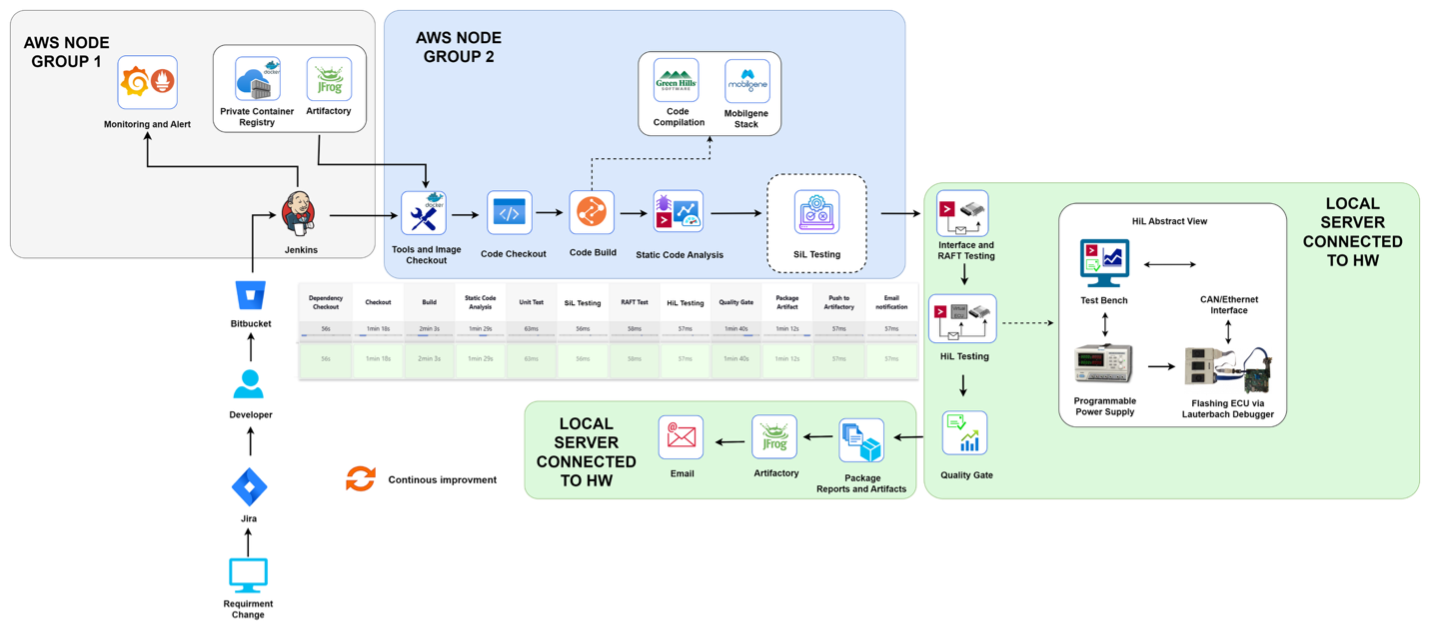
Standalone AWS instance:
Hosts: Grafana
Monitors the cluster, applications and individual nodes
Monitors the Jenkins pipelines
Local server connected to hardware setup:
Internal server
Windows based
Hosts: RAFT and ECU testing tools
Connected to hardware for automated testing stages
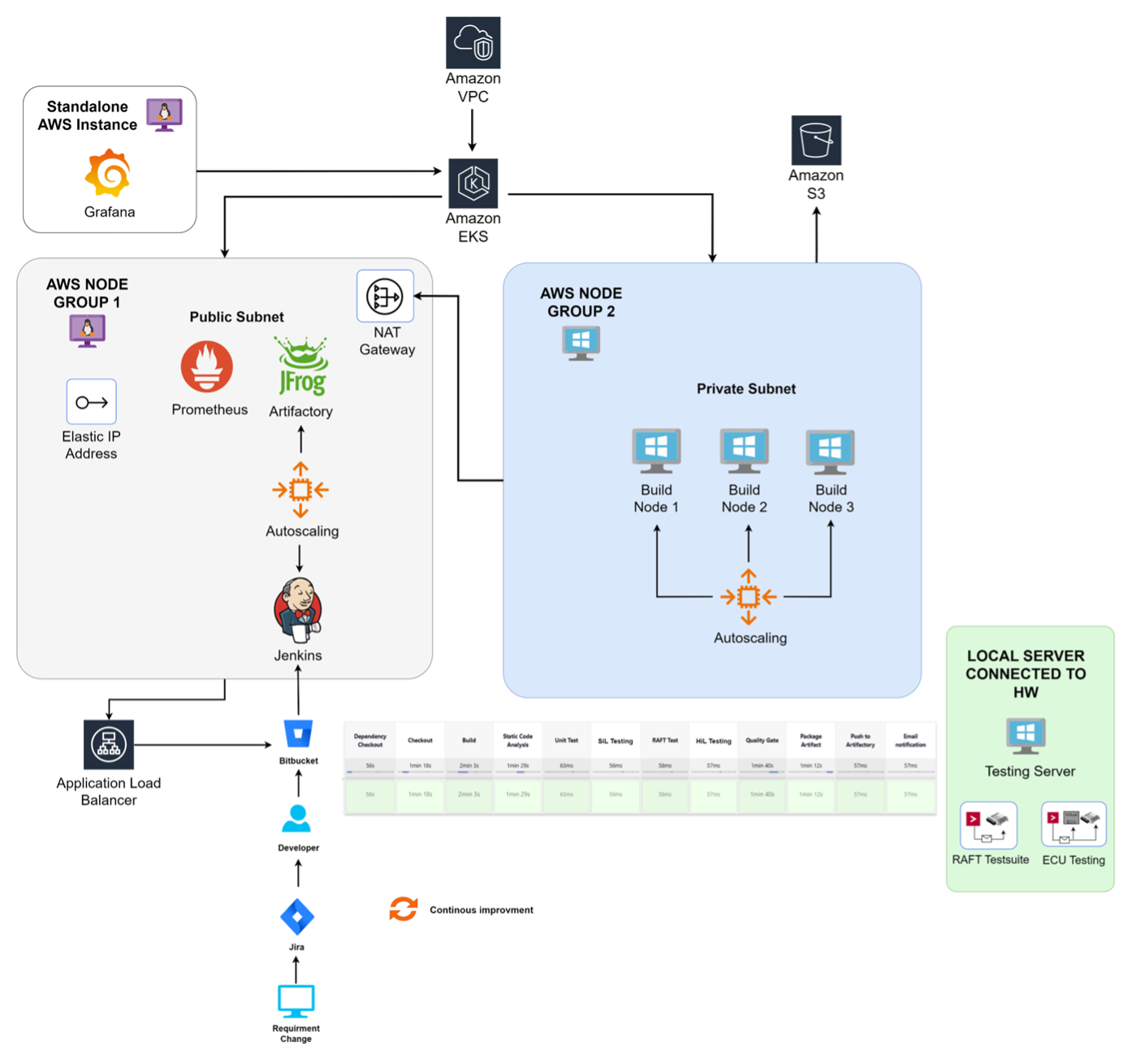
AWS Node Group 1:
Public subnet
Linux based
Hosts: Jenkins, JFrog Artifactory, and Prometheus
Elastic IP accessible publicly
Integrated with Bitbucket via an Application Load Balancer
Autoscaling enabled for higher workload demands
AWS Node Group 2:
Private subnet
Windows based
Connected to the internet via a NAT Gateway for secure outbound traffic
Amazon S3 stores logs and backup data
Autoscaling enabled for build nodes to handle multiple pipelines parallelly