
Start stop systems with IoT and OTA software updates

Feb 19, 2021
These connected start stop systems optimise the fuel consumption and CO 2 emissions from heavy duty off-road mobile machinery used in energy production. The company has an interesting background and stumbled on its flagship product of start stop systems through determined innovation and investigation of the underserved desired outcomes in the market. Felix starts by explaining the background to EKU Power Drives. In 2009, the founders of EKU Power Drives Edward Eichstetter, Manuel Klein, and Leonardo Uriona made their names by engineering the fastest accelerating electric car, it recorded a speed of 0-100Km acceleration in 2.681 seconds.
by Karolina Beta
The Device Chronicle spoke to Kristian Binder and Felix Steinle from EKU Power Drives about start stop systems, IoT and OTA software updates.
Start stop systems for efficiency
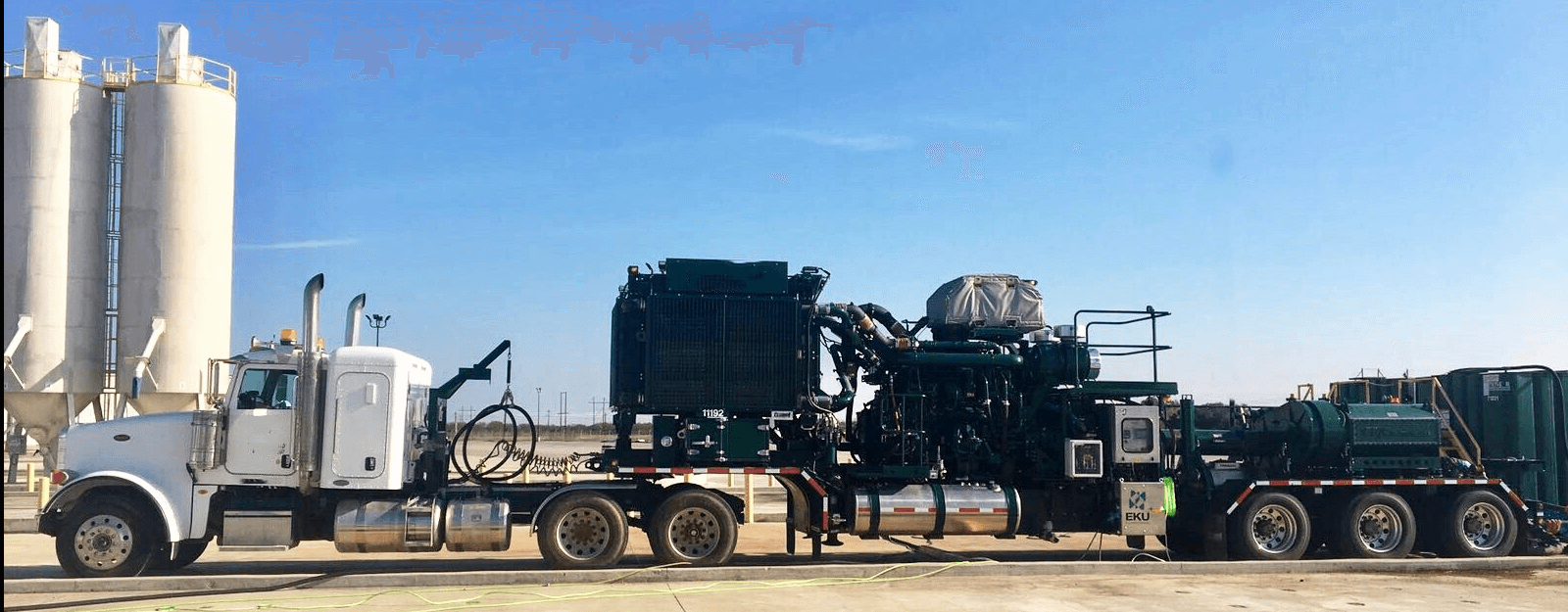
The founders put their engineering nous into addressing optimisation in the energy sector. They wanted to make large energy intensive processes more efficient. They tried to solve problems associated with the use of oversized diesel engines used in the oil and gas industry for well completion. These machines were oversized so therefore they over consumed the fuel needed to complete the task. The idea was to replace the diesel engine with a smaller natural gas engine and build a hybrid with an electric motor and lithium-ion battery.
The company now focuses on increasing the flexibility, sustainability and efficiency of heavy duty off-road mobile machinery. In order to offer a better solution as the diesel engine, engineers in the company started developing a dedicated natural gas engine hybrid concept. This would replace the diesel engine and offer a cleaner, and more energy and cost-efficient solution. “Idle time reduction is a big part of the savings and during downtime we pivot the first product strategy and take the idle management part and offer it also for the diesel engines. There was an opportunity there to automatically switch off the engine saving fuel and CO 2 emissions.”
Start stop systems are normal in automotive
This opportunity was inspired by what the EKU Power Drives team saw in the automotive start stop systems. Kristian explains “It is normal in automotive to have start/stop systems such as when you stop an automobile, a traffic light the engine switch off.” The team took this idea and transferred it to large diesel engines in trucks in the oil and gas industry that are used for well preparation. They found the use case could also be adapted to other sectors such as mining and marine. KU Power Drives was up and running!
Start stop systems bring huge savings
EKU Power Drives found in the telemetry system that with these large machines, between 0.5 and 2 tons of C0 2 could be saved per machine per day in emissions, depending on the use case by using an automated start/stop mechanism. Kristian describes this as a longer term saving on primary energy in fuel costs and engine maintenance where the systems could be used for longer before maintenance would be required. Kristian states “If you have 30% less operation hours, 30% longer life time of the system before you have to maintain it. The typical service intervals of these engines are oil changes every 250 hours and major maintenance every 1000 hours or up to 4 times per year. In summary, maintenance costs of each unit can reach 300,000 per year. Since the OPH reduction system prolongs the service intervals, this is one of the biggest cost savers for clients. There was also the very valuable benefit of green energy efficiency.
Start stop systems in a diverse Integration environment
The start stop systems are integrated into a range of different vehicles in the field and the systems that are supported are diverse and the machine configurations can be very different in each case. Kristian continues “There are different engine manufacturers, different transmissions and different PLCs to integrate with, so the starting point is the data to find out how is the system working? How is the electrical wiring done? What are the states the unit will be? What are the key signals that can be got from CanBus J1939 embedded bus mechanism? And so on.
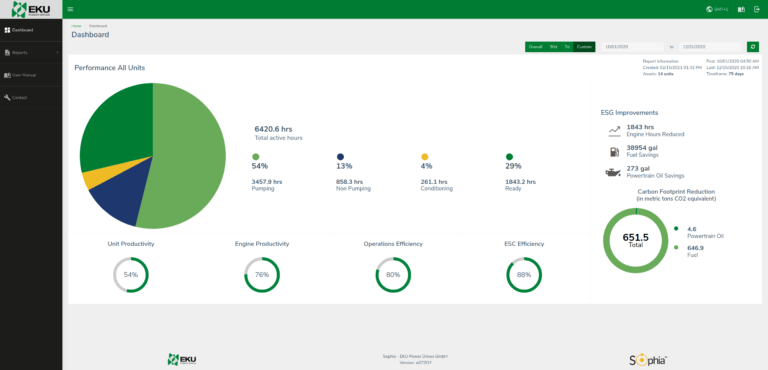
The company also uses off-the-shelf loggers, these are actually offline devices. One of the use-cases of our own “Edge Node” device, currently in development, will be to act as a Bus logger and connected to the company’s SOPHIA (Status Monitoring – Operation Hours Management – Intelligent Automation) cloud system. The loggers will go online eventually to get daily data. The customer uses insights from this data to assess how well the system is working, many hours of pumping the machines do, how many hours of idle time can be reduced through start/stop optimisation? Besides technical insights for engineering, our SOPHIA cloud provides a graphical front-end for the client’s management, helping them to understand their saving opportunities. Besides technical insights for engineering, the SOPHIA cloud provides a graphical front-end for the client’s management, helping them to understand their cost saving opportunities.
